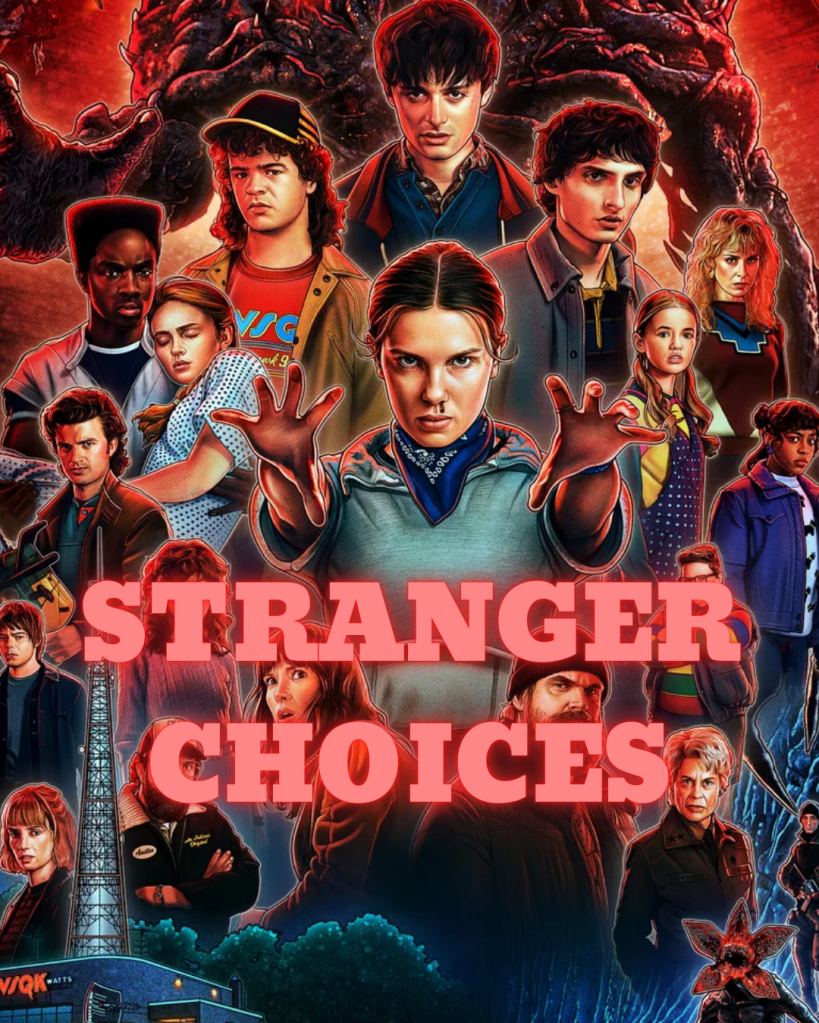
Fan of the show or not, if you’ve been anywhere on the internet in the past week, you’ve definitely seen a flood of predictions and reactions to the series finale of Netflix’s Stranger Things—and to season five as a whole—both positive and negative. And while I have strong opinions of my own (again, both positive and negative) about the final episode, what has fascinated me more than any Duffer Brothers ending ever could is what this single episode of television did to its viewers. That’s where I’d like to start. Don’t worry—this post will also include my thoughts on the show itself.
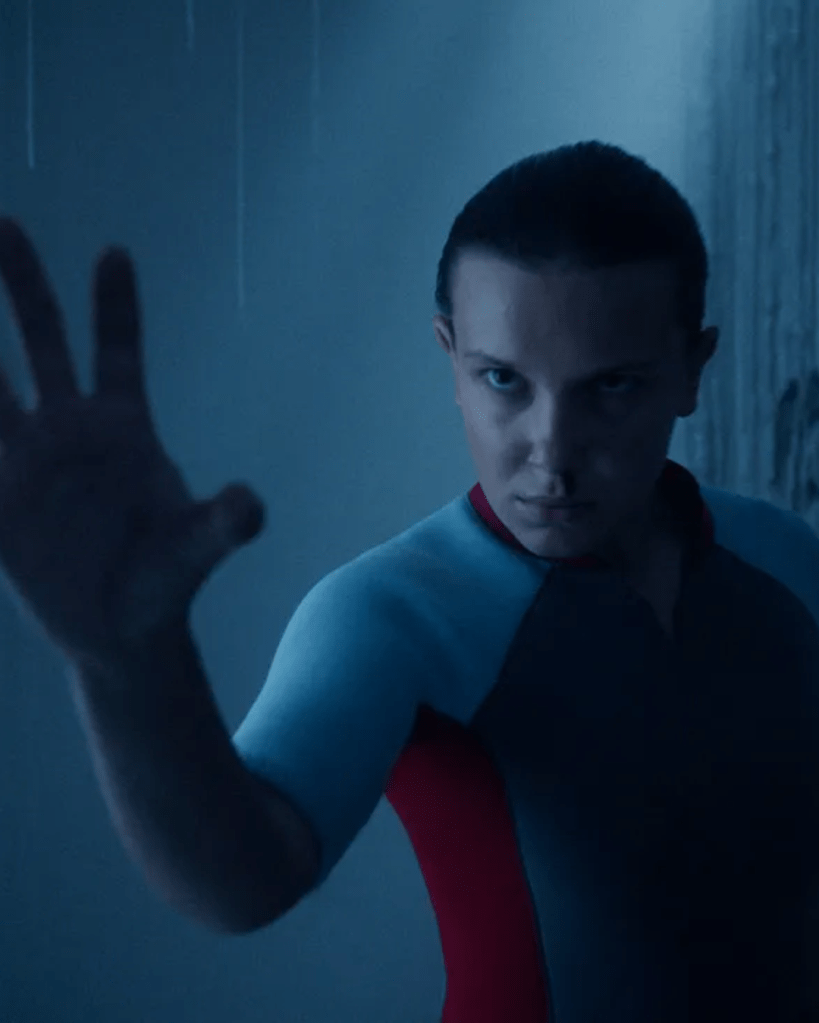
One thing I’ve noticed over my extensive history of enjoying television is that distance from a finale can sometimes help you view it through a different lens. I chalk this up to the fact that when you’re emotionally invested in a show, there are very few ways writers could end it that would truly satisfy you. At the end of the day, sometimes we simply don’t want the story to end. However, once the initial grief of it being over subsides and you have time to process what you’ve seen, you can approach a rewatch with a different perspective.
This has happened to me three times: Roseanne, The Sopranos, and Game of Thrones. It’s this last example I want to focus on.
When Game of Thrones ended, I immediately found myself in the “worst finale ever” camp—a camp that, at the time, seemed to include most of the audience. Daenerys Targaryen, who spent nine seasons talking about breaking the wheel of tyranny, ultimately used her dragons to raze King’s Landing and its entire population. We were furious. What was the point of building up this brave breaker of chains only to have her turn heel in the end? (That said, The Battle of Winterfell two episodes earlier was incredible from the jump, and yes, I will die on that hill.)
I spent about a year disgusted with that ending—until I attempted my first rewatch, and wow did I feel silly. The signs were there all along. Other characters consistently described Dany, both to her face and behind her back, as a “conqueror,” sometimes even in complimentary ways. We cheered every time she enacted what we, as an audience, emotionally felt was righteous justice, even as her punishments steadily escalated in severity. Hell, some of us (who said that?) were even ready to give her a pass to harm some innocent people after the shocking death of Missandei.
The truth is, the character behaved in a way that was true to her nature—and we had been shown that nature for nine seasons. Sometimes people can’t suppress who they truly are. Once I understood that simple concept, the ending felt less like a betrayal and more like a bold, deliberate choice.
I call out Game of Thrones specifically because it gave its audience an ending nobody wanted. Put more simply, no one was rooting for Dany to go evil. So no one was happy.
The Duffer Brothers, however, gave their audience exactly what they wanted—right down to refusing to truly kill off a single beloved character in the final, world-saving, life-or-death battle. And still? No one is happy.
I’m being a little hyperbolic here. Of course, there are fans who adored the sweet ending where every character got a happy resolution. But there is also a large, vocal online majority devastated by what they feel is a major letdown after investing so deeply in this show. As for me, I lean toward the latter end of that spectrum—but my past experiences with finales caution me against being too loudly opinionated before revisiting the series in full.
That said… there are a lot of problems.
Missed Opportunities, Mistakes, and LIES?!
Duffer Brothers’ Instructions
In my opinion, the most egregious problem with the final season of Stranger Things was the lies and misdirection promoted by the Duffer Brothers throughout their press tour. I’m honestly not sure what they were thinking here. It’s the equivalent of discovering that a magician famous for mesmerizing audiences had been using planted audience members the entire time. There was never an incredible trick—just a falsehood.
A prime example is the repeated claim that there would be a traitor in season five. How exciting! Fans watched with rapt attention, pausing and replaying episodes to search for clues. And in the end? There was no traitor. As an author myself, I can’t imagine promising readers something that specific and then failing to deliver on it.
Time Travel
Stranger Things fans noticed countless hints and nods toward time travel throughout season five, some even harkening back to earlier seasons. Vecna retreating into a memory of himself as Henry Creel in the Creel house during the 1950s suggested that time distortion was a real possibility. We fixated on the memory of Joyce handing out flyers for Oklahoma! at Hawkins High School—only for that thread to lead to… nothing?
Joyce, Hopper, Ted and Karen Wheeler, Alan Munson (presumably Eddie’s father), and Patty Newby (presumably Bob’s sister) all appear alongside Henry Creel in that memory. Yet present-day Joyce and Hopper never get the opportunity to realize who they’re truly dealing with. Nothing during the production seems to signal this as a painful or significant moment for Henry.
So… what was the point of that?
Other Issues
There were countless moments throughout the final season and finale that initially felt like clues toward something incredible (more on that later), but ultimately came across as mistakes—or at least baffling choices.
An extra in the audience during the graduation scene is wearing a “1985” button, despite our heroes graduating in 1989 (other extras are clearly wearing 1989 buttons).
The foliage in the final scenes is orange and yellow, giving strong autumn vibes, despite the graduation taking place in May.
During Will’s coming-out speech, he mentions “getting lost in the woods” and “biking to Melvald’s for milkshakes.” The woods reference is strange, considering his trauma in season one. But the Melvald’s reference is worse: Melvald’s no longer sells milkshakes and functions as a drugstore—something Will would absolutely know, given that Joyce worked there before moving to California. I later learned this was a nod to the Stranger Things stage play, meant for fans who’d seen it. Unfortunately, for viewers who hadn’t, it read like a genuine hint toward time travel or Vecna’s influence—especially since Melvald’s would have sold milkshakes during Henry’s childhood.
There were multiple setups with zero payoff. Hopper spends the entire season suspicious of Kali, and it leads nowhere. After being told to watch for a traitor, many fans assumed Kali had been working with Vecna all along. Nope. Or take Robin and Vicki’s repeatedly promised date at Enzo’s—mentioned multiple times, never delivered.
Can anyone explain why the Mind Flayer chose Henry in the first place? Or why Henry chose to merge with it? Or the fixation on clocks, spiders, and the twelve children Vecna needed to complete his plan? None of it is clearly explained, and it all feels random.
When Joyce beheads Vecna, we flash back to moments of pain our heroes endured—Bob, Eddie, Barb, and others—but not Billy, whose death profoundly affected Max in season four.
The final boss fight lasts roughly five minutes, and no one suffers even a serious injury. Come on. We even ended the show with Ted Wheeler still alive…TED?!
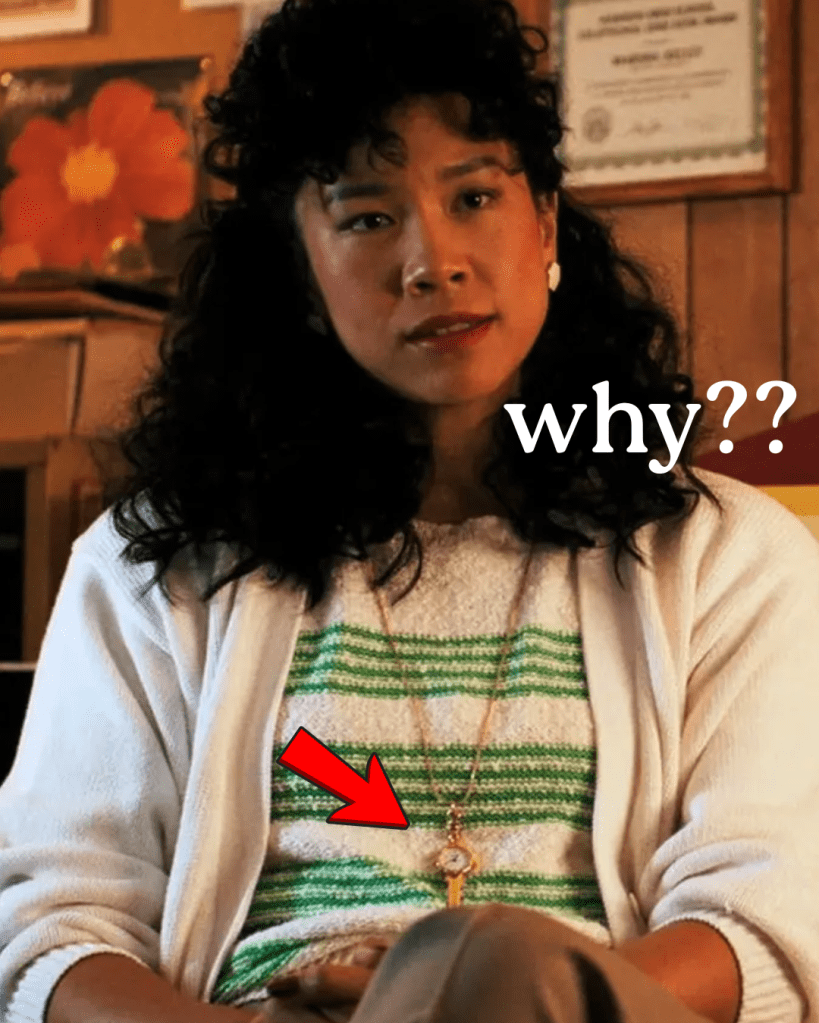
There’s no resolution for Robin and Vicki. In Robin’s final scene on the WSQK rooftop, she references an overbearing significant other—but we’re left unsure whether that’s Vicki or if they broke up.
What happened to Murray? A staple character since season two, and he doesn’t even get a brief goodbye or hint at what’s next.
The same goes for Susie and Argyle. Can we assume they’re fine? Sure. But for characters fans loved, a short resolution would have gone a long way.
Perhaps most disappointing of all is how the Duffers handled Erica. After fully integrating her into the group and positioning her as a core member—especially following her role in Eddie’s D&D campaign and the fight against Vecna—she ends up setting off confetti cannons at graduation and isn’t invited to the final D&D game. Cool.
While these are only some of my lingering questions and frustrations, that doesn’t mean the season lacked moments I genuinely loved.
- Will’s powers finally manifesting (you’re lying if you didn’t think that scene was cool as hell).
- Will’s coming-out scene, despite the surrounding misdirection, was still powerful.
- Mr. Clark being brought into the final stages of the battle—long overdue, but satisfying.
- Hopper’s monologue to Eleven about staying alive for the chance at happiness. David Harbour was devastating.
- Jonathan and Nancy’s breakup scene, which smartly subverted the “proposal during the final battle” trope.
- Mrs. Wheeler getting to be a badass twice. Enough said.
- While I didn’t love Holly’s sudden elevation to near–main character, I did enjoy her arc from frightened kid to confident leader—Holly the Heroic. Ending with her and her friends as the next generation of D&D players was a lovely touch.
Perhaps the most significant thing the Duffer Brothers succeeded at was turning their audience against one another. One half walked away feeling betrayed and heartbroken by what they see as a messy season. The other half, thrilled that their favorite characters survived, eagerly labeled the first group as stupid, illiterate, or emblematic of America’s literacy crisis.
I know this puts me somewhat out on a limb, but I think nuance can exist here. We can be disappointed by certain choices and still appreciate others. Yes, some fans are upset because their favorite theory—whether “Byler” or “Kali as the Mind Flayer”—never came true. But there’s a much larger group simply left saying, “Huh?” because, frankly, a lot of strange decisions were made.
Still, one thing is undeniable: the Duffers succeeded in getting a massive portion of the population to discuss, debate, and dissect every detail of their story.
So I’ll leave you with this question:
Did fans, in the end, write a better show than the Duffer Brothers?
What do you think? Leave a comment and let me know your thoughts!
 briennedaugherty.com