
In the short time I’ve been delving back into the writing world I’ve attended a few writers’ events both in-person and online. One topic that keeps coming up is the struggle that many of us face with creating a writing habit, or routine. It’s good to know that this challenge is widely shared, which makes it feel a little less like a solitary struggle.
Trying to maintain a writing habit (and I say trying because guys, it’s just never going to be perfect and we can be okay with that, can’t we?) offers benefits that can transform both your craft and your confidence. Being a writer doesn’t mean you have to be traditionally published, widely read, or anything like that. It’s the position of this blog, and I’m sure I haven’t stressed enough, that being a writer means you – write. What makes you feel more like a writer when someone asks? Affirming their question, while knowing in the back of your mind that you haven’t touched a blank page in six months? Or a hearty yes bolstered by consistent daily practice?
Probably the biggest benefit of all, in my opinion, stems from the relationship my habit allows me to have with the blank page. It’s Saturday, the kids are away and the house is quiet. It’s the first time I’ve allowed myself to sit down at my laptop in a month. I open up Microsoft Word and stare. I think back to all those great ideas I had when I was doing laundry and helping with homework. Then I look at the clock and an hour has passed. The kids are going to be home in another two. You get the idea. If you allow yourself even small segments of writing space in your daily life then it becomes drastically less daunting to sit down for that once-in-a-blue-moon writing session that you need to “make count.” Bottom line – the blank page becomes a lot less scary when you see it every day, even if only for a few minutes.
Now, being freshly back into writing after a long hiatus certainly hasn’t equipped me with the magic answer, but I thought I’d share the steps that have been reliably working for me. If you feel I’ve missed something or have another method that works for you, I’d love for you to comment below and leave your advice for other writers!
It’s okay for goals to be small.
Sure, all of us would love to be as prolific as Stephen King, but I’m pretty sure Tabitha was doing the majority of the housework and child-rearing while he was writing Carrie. It’s preferable to be realistic with what you’ve got going on in your life. Nurses working 12-hour night shifts and waking up to make dinner and get the kids to soccer practice should not have the same daily writing goal as a single person with a part-time job. If you’re the ambitious sort like me, you’re already pushing back against this first point, but it’s better to create small, attainable goals for yourself because the most important part of goal-setting is not how much you get done, but that you get it done. Consistently setting and meeting goals are the building blocks of confidence. Confidence makes you better at your craft. When you set a goal that would be unlikely for you to meet and you don’t achieve it accomplishes the opposite: it erodes confidence.
It’s okay for goals to be flexible.
Piggy-backing off of my last point, no matter how small your goal there’s nothing wrong with adjusting it mid-stream and this does not constitute failure. As a personal example, I set myself the goal to touch my writing every day. I take care of two kids and a home and I work a part-time job while actively searching for a full-time job, so my time is pretty limited. So instead of telling myself I need to achieve X number of pages every day, I set out to simply touch my own work.
What does this mean? On my days off, when I know I’ll have an open few hours to devote, it looks like working on short stories and sometimes novels. If I know my time will be somewhat limited I might pull out a finished draft and work on getting at least a page edited so I’m one step closer to another finished piece. On extremely limited days I might sit down with 20 minutes to spare and try to bang out a short haiku. Every form of writing, even if it’s not your typical bread and butter, helps you grow. Growing helps you achieve your goals. Be flexible with what you hope to accomplish and consider branching out into territories you’ve so far left unexplored. You might surprise yourself!
Re-Classify Your Writing Practices
This advice is certainly unconventional and perhaps even controversial, but I strongly stand by it. There are things that I do every day that I consider part of my writing practice, but…they aren’t writing! These are activities I deliberately incorporated into my daily routine to aid in my writing abilities and I haven’t been let down by them yet. Some of them you may already do yourselves and if so I think classifying them as part of your writing routine is beneficial to your mental health and the way you approach your practice. Here’s what I do:
- Daily crossword puzzle – It challenges my brain to think about words differently, consider context clues, remember vocabulary words I’d forgotten about, and introduces ones I didn’t know. All of these outcomes can only benefit someone who works with words.
- Read my daily dictionary.com email – Did you know that you can sign up to receive a “Word of the Day” from dictionary.com? What better way to expand your knowledge of language? Bonus points if you try to use it once throughout your day!
- Reading – Maybe it’s cliche to reference Stephen King twice in one post, but I believe he’s the one who said that if you want to be a writer you need to do a LOT of writing and a LOT of reading and that’s the truth. Picking up any book is good, but selecting books with intention is great too. What are the highest-rated, most popular books in your genre doing? What tools and tips do you want to take away from those and which do you think you’d rather leave behind? Snag a book from a genre completely unlike the one you write in. What can you take away from subject matter so foreign? Bonus points for reading books on the craft of writing!
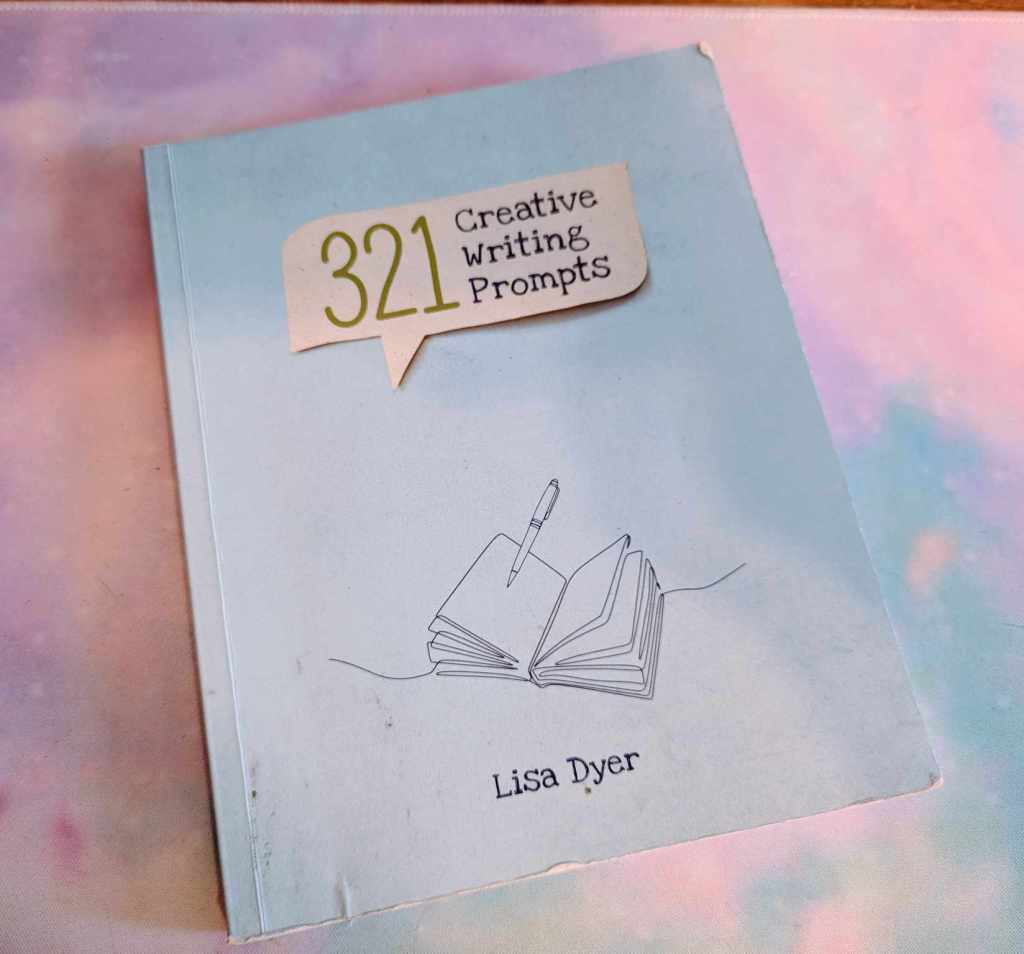
- Ideas book – This can just be a notebook or a notes app on your phone (I use both), but it can also be helpful to get a book with writing prompts in it. I was gifted one about a year ago and every day I incorporate it into my morning routine. I sit down with my cup of coffee in the morning and open my 321 Creative Writing Prompts book and I jot down the beginnings of an idea in a few lines using a prompt like, “Imagine you’re a fashion designer in the 60s creating a piece that would rival the mini-skirt.” I can’t tell you how many times I’ve come back to that book, flipped through it, and yanked out an idea for a short story.
Paint by Numbers
This is what I’m calling the act of completing activities out of writing books. The blank page was just extra intimidating today and you can’t think of a thing to write. That’s okay! Do not let the time you set aside for yourself go to waste. Pull out a book like The Complete Handbook of Novel Writing (this is my go-to) and follow along with the exercises to create a simple scene. We’re not looking to write the great American novel here. We’re simply using this time to practice and grow our skills.
Create a boring character like Bob. Bob is an anxious guy at a boring office and we’re going to use our book’s section on creating an inciting incident to help us craft a problem for Bob. It’s not Bob’s birthday and yet his whole team just approached his desk and is now singing happy birthday to him, cake and all. Maybe we complicate the situation and say this event was planned by Gina, the colleague he’s had a crush on for years. Does he embarrass her by telling everyone this was a mistake? What if it was someone else’s birthday and it was just a mix-up? Will he have to go on pretending this is his birthday every year? The point is – we’re not always going to be working on our next masterpiece. It’s beneficial to trace out the finer points of storytelling with a little bit of help until you feel comfortable free-handing it.
It’s important to remember that building a writing habit isn’t about perfection or meeting rigid expectations—it’s about showing up for yourself and your craft in whatever capacity you can. Writing, like any other skill, is a journey of growth, experimentation, and self-discovery. Some days, you’ll feel unstoppable, and other days, you might only manage a single sentence, but both are valuable. The key is to keep going and find joy in the process. Writing is as much about the effort you put in as the results you produce, so give yourself grace, stay curious, and trust that every word you write brings you closer to the writer you want to become.
 briennedaugherty.com