What makes a book scary? I won’t say that horror films have it easier but I mean, come on. In film the monster is right there! Films are able to rely on tools like jump scares and music changes to shift the mood and get the job done. Writing, however, is an art form that takes place inside the reader’s mind. It’s a dance, a collaborative effort between author and audience. I get to set the table but it is the reader’s responsibility to sit down and eat.
So what do we do, as horror writers, to set the perfect table that will encourage our reader to sink their teeth into what we have to offer? I notice that when I’m reading a horror novel there are three specific tools that seem to generate fear. And as a writer at the beginning of her journey I’ll note that there’s probably a lot I’m leaving out, but for me these are the things that come to mind.
Circumstances
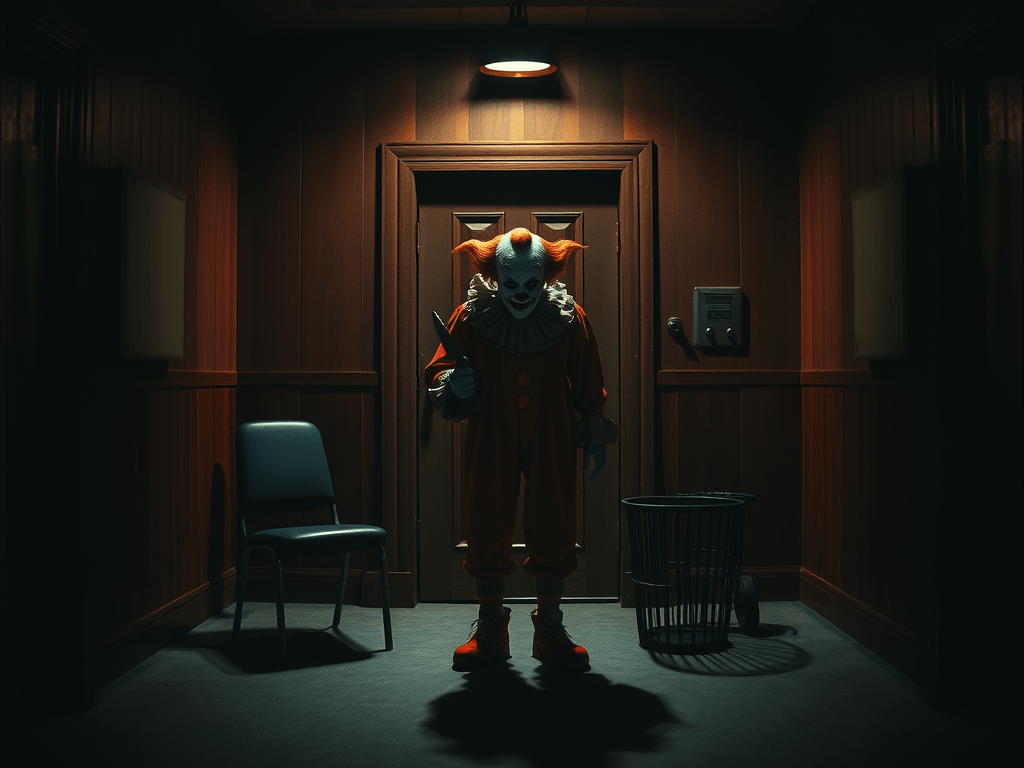
Circumstances create, in my opinion, one of the more visceral feelings of fear while reading. Placing your protagonist in a predicament from which there is seemingly no way out can cause all the muscles to clench. This is how you take your evil clown character to the next level. Sure, an evil clown is creepy and if written well may even be spooky. What if I placed my evil clown inside the locked interrogation room where you’re waiting to be interviewed? He’s between you and the door, he’s got a knife and the only other objects in the room are a chair and a waste basket. Can others see him? Or does he only appear to you, making receiving help from others impossible? Now, we’re getting somewhere. Circumstances can make you feel trapped, overwhelmed, paranoid, jumpy and clenched.
Here’s a great example from a book I just finished reading:
“I’ve reached the front of the plane, no room left for me to escape other than the locked door of the pilot’s cabin. Fortunately, there’s also a single bathroom stall up here, and it’s currently unoccupied. As my pursuer reaches out with her long slender hand I duck and dodge, throwing open the restroom door and slipping inside with a swift, seamless motion.”
In Bury Your Gays by Chuck Tingle, the protagonist, Misha, is cornered by a real life version of a spooky character he created. Her “weapon” is the touch of her hand which makes the close quarters of an airplane the perfect place to put this scene. By cornering Misha in a tiny bathroom stall while Mrs. Why waits outside we are forced to wonder how we would fair in a similar situation. I can tell you how I would do… And it’s that, “God, how would I even get out of that?” feeling that infuses us with the fear for our own mortality.
Vivid Detail
This is a horror tool that needs to be expertly wielded. It can be too easy to place heavy focus on the gross-out parts of horror and not enough on the other details that make a scene scary. (Combining vivid detail with circumstances is, I think, the sweet spot.) Consider – Blood began dripping down the walls. Yawn. How about? – Thick blood, with large chunks of what looked like oatmeal began running down the walls. I realized immediately it must be Patrick’s brains! Gross – but not inherently scarier than the first sentence. But what if we combine circumstances with detail?
I stood with my back against the wall, half-listening to the conversation, when I felt a warm, trickling sensation down my back. The scent of old pennies suddenly filled the room. Trying to go unnoticed, I reached a trembling hand behind my neck, desperately hoping to be wrong. The dark crimson shined in the light of the one remaining bulb and I leapt from my hiding place, frantically swiping the blood off on my pants.
I’ll leave you with this sweet little number from Gerald’s Game by Stephen King. Gross? Yes. Terrifying detail? Also, yes.
“The cuff was moving because the skin it rested on was moving, sliding the way a heavy object on a rug will slide if someone pulls the rug. The ragged, circular cut she had inscribed about her wrist widened, pulling wet strands of tendon across the gap and creating a red bracelet. The skin on the back of her hand began to wrinkle and bunch ahead of the cuff, and now what she thought of was how the coverlet had looked when she had pushed it down to the bottom of the bed with her pedaling feet.”
Beats
Beats are the ticking of a spooky clock. In film, beats would be the pauses between lines, the footsteps up to the door that’s about to swing open unexpectedly, the lingering on a moment a bit too long. Beats are how horror writers create dread – expectant fear. I think of it as pre-fear, the feeling you get right before you know a good scare is coming. This is particularly challenging with the written word because a blank gap between paragraphs doesn’t really do much for the reader.
Yet there are ways to create the feeling of beats even through the use of language. Here’s an example from Incidents Around the House by Josh Malerman. Eight-year old Bela has been pestering her friend atop the playground equipment when an incident occurs.
“It’s not easy, but I get to the top. The wood room Deb is in is just the little bridge away. Deb? I ask. Are you mad at me?
I cross the wood bridge.
Deb. I’m sorry.
I hear her in the dark. She’s crying… I can see a little of her face in there.
Bela? Yeah? Can I? Can you what, Deb? Can I go into your heart?
I look over the safety railing, down at the playground sand. I see Deb running back to our mommies down there.
Can I, Bela?
It’s Deb’s voice from the dark. Fingers curl around the edge of the entrance to the wood room. Fingers with hair.”
Look I’m not going to pretend to be a guru or writing expert. I’ve got a ways to go on my own writing path and I truly don’t think we ever stop learning. But when I sit down to think about the factors that really turn a scare up to eleven for me these are always part of the consideration. I hope this helps! Let me know what YOU think makes a story scarier down in the comments below.
 briennedaugherty.com